
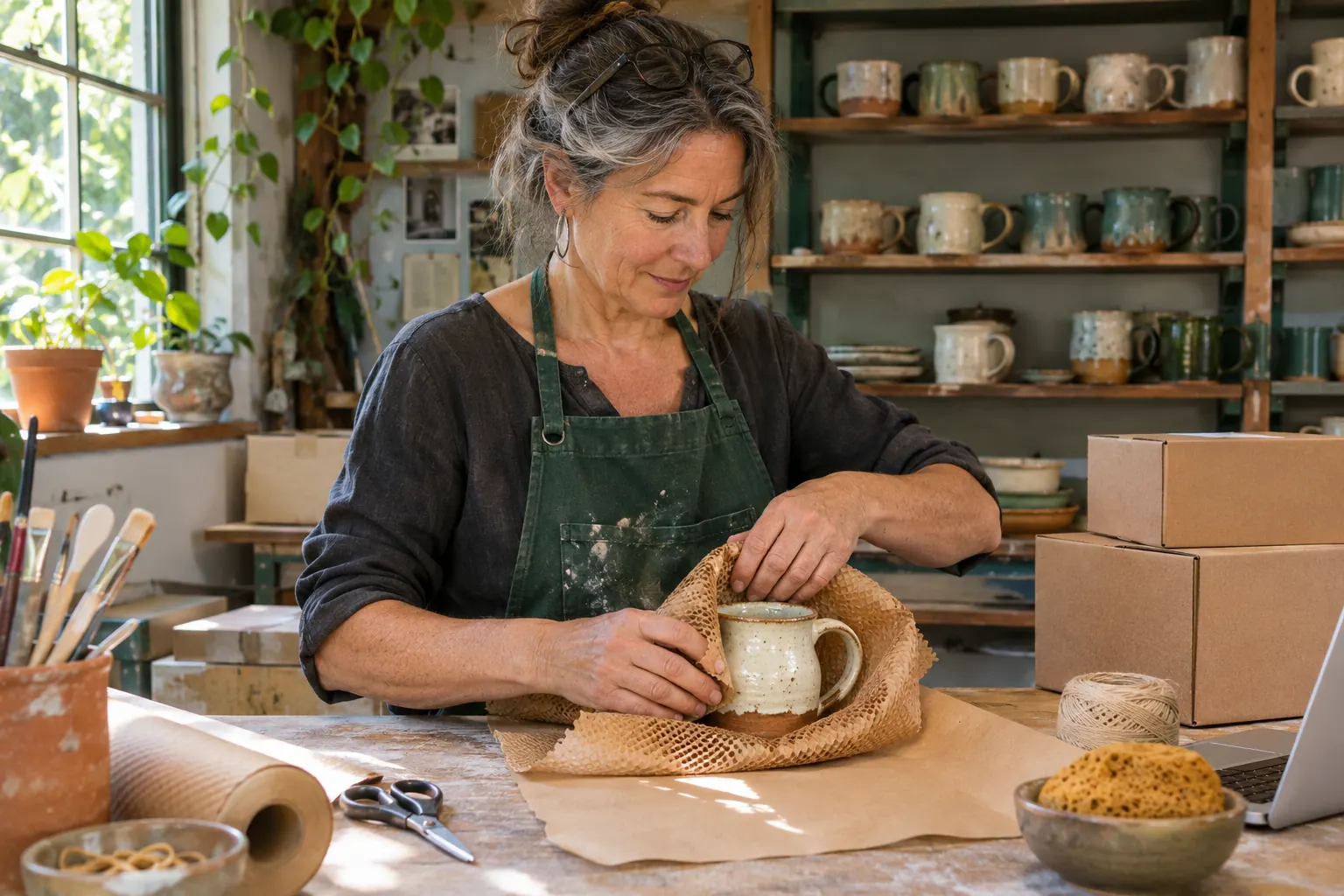
Main caution: Count your own making time. Many makers price materials only and end up paying themselves very little.
What it costs to run
These are the categories to price with local quotes. The plan lists every one of them for you.
Every item
- Materials per item
- Packaging and labels
- Shipping you pay
- Market or booth fees per item
- Other per-sale costs
Every month
- Store platform, apps and subscriptions
- Storage or workspace
- Product liability insurance
- Ongoing marketing and ads
- Bookkeeping and tax preparation
- Other monthly costs
To start
- Tools and equipment
- First stock of materials
- Craft-fair booth setup
- Business registration and local licenses
- Website, logo and booking or store page
- Other one-time costs
Your own pay is part of the cost, too. The plan works out the price that covers it — or start with how much to charge for handmade goods.
Licenses, insurance and rules to check locally
Requirements differ by state, county and city. Check two layers:
1. Your own license, if the work needs one
Some work needs a personal license or certificate (a food-handler card, for example). Search the CareerOneStop License Finder (US Department of Labor) for your kind of work and state.
2. Business licenses, permits and insurance
Start with the SBA: Apply for licenses and permits guide, then your city or county. Questions to answer:
- Does your city or county require a general business license or registration?
- Does your state charge sales tax on your goods? Craft fairs may need a temporary seller’s permit.
- Do your products need labeling or testing (candles, cosmetics, children’s items)?
Check local prices before you set yours
Get three real prices from handmade goods businesses near you, the way a customer would: their websites, a quote request, local listings and review sites, or neighborhood groups. Note what each price includes. Enter them in your local plan — it shows where your price sits and whether your costs leave room to compete.
Test demand before you spend
Pre-sell a small first batch at your real price to people who match your customer — through a simple order page, a local market or your network — before investing in more stock or equipment.
Decide your pass mark before you start — for example, a set number of paid items within 30 days.
Questions your local plan has to answer
- What do local competitors charge? Ask for quotes the way a customer would.
- How long does each item take you, including travel and preparation?
- How many items can you deliver in a week at a quality you’re proud of?
- How will customers find you, and what will it cost to win each one?
This profile is educational. It describes how this kind of business generally works; it doesn’t show that it will be profitable where you are, and it isn’t legal, tax or financial advice.