
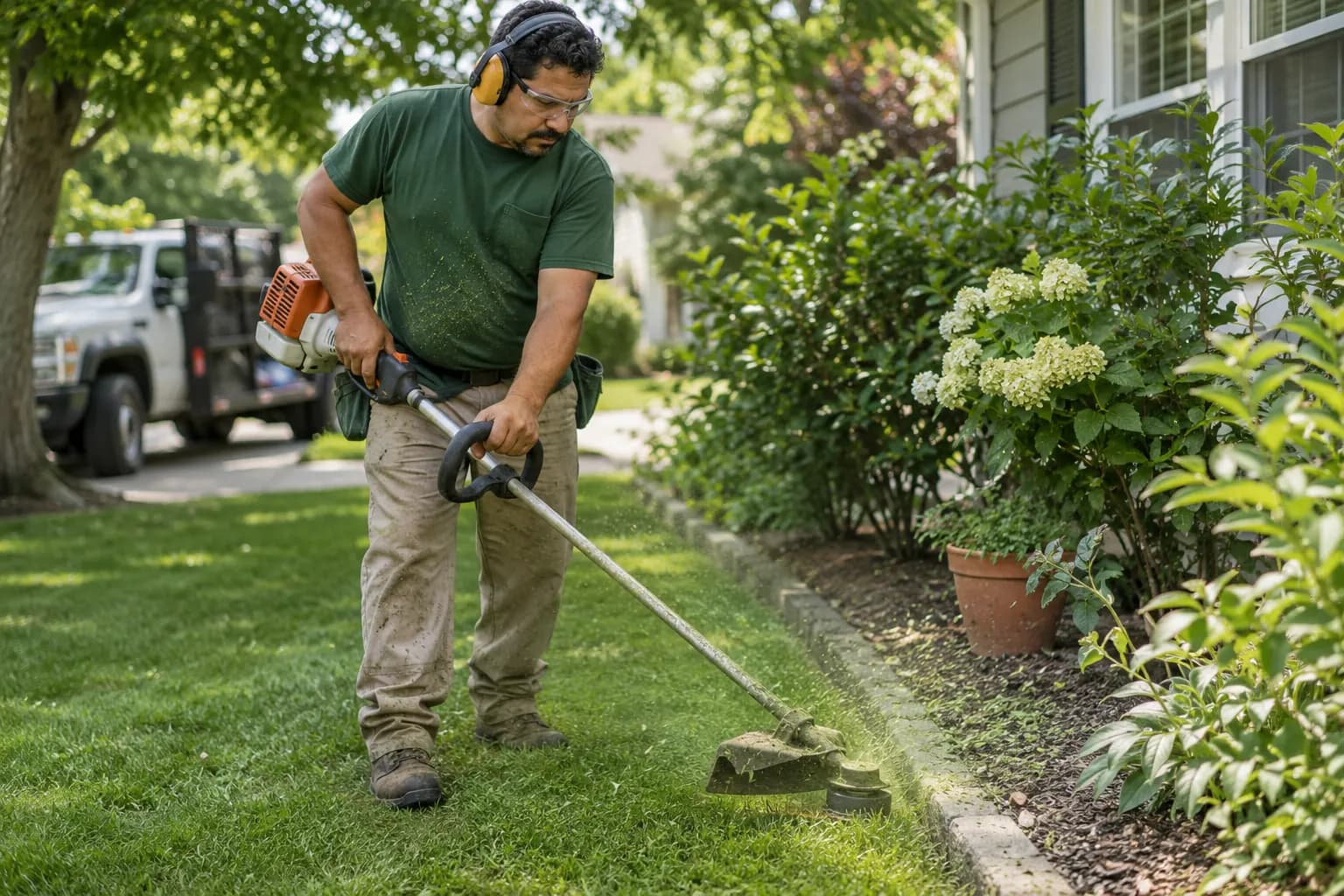
Main caution: Keep basic yard services separate from regulated or specialist work. Applying pesticides or herbicides for pay, tree work and irrigation often need licenses, training and insurance of their own.
What running this business involvesWhat the owner does, who buys, how customers are won, and the demands on your time
What the owner actually does
- Mowing, edging, trimming and blowing on a regular route
- Seasonal cleanups, leaf removal and simple yard projects
- Planning routes so properties are close together
- Maintaining, repairing and eventually replacing mowers, trimmers and the trailer
- Quoting, scheduling around the weather, billing and collecting payment
Who buys
- Homeowners who want a regular service
- Older adults and busy families
- Landlords, property managers and homeowner associations
- Small commercial properties
How customers are won
- Door hangers and word of mouth on streets where you already work — density lowers travel time
- Local search listings, neighborhood groups and reviews
- Season-long service agreements signed in late winter or early spring
- Relationships with property managers and real-estate agents
Demands on your time and skills
- Hard outdoor work in heat, cold and rain
- Weather delays push work into longer days
- Busy months can exceed your hours, and slow months may bring little income
- Growing means a second crew: more equipment, people and supervision
What it costs to run
These are the categories to price with local quotes. The plan lists every one of them for you.
Every job
- Fuel for mowers and trimmers
- Travel to the property (fuel, mileage)
- Blades, line, oil and equipment wear
- Yard waste disposal fees
- Helper pay per job
- Other per-job costs
Every month
- General liability and commercial auto insurance
- Truck (business share)
- Equipment or vehicle payments not entered as a loan
- Equipment repairs and saving to replace equipment
- Phone and internet
- Scheduling, invoicing and payment software
- Ongoing marketing
- Bookkeeping and tax preparation
- Storage and other monthly costs
To start
- Mowers, trimmers, blowers and hand tools
- Trailer, ramps and tie-downs
- Safety gear
- Business registration and local licenses
- Website, logo and vehicle signs
- Other one-time costs
Cash to keep in reserve
- Living costs through the slow season
- Repairs or replacements when equipment breaks during the busy season
- Pre-season spending before the first payments arrive
Your own pay is part of the cost, too. The plan works out the price that covers it — or start with how much to charge for lawn care and basic yard services.
Licenses, insurance and rules to check locally
Requirements differ by state, county and city. Check two layers:
1. Your own license, if the work needs one
Search the CareerOneStop License Finder (US Department of Labor) for “Pesticide applicator” and choose your state. It lists state occupational licenses and the agency that issues each.
2. Business licenses, permits and insurance
Start with the SBA: Apply for licenses and permits guide, then your city or county. Questions to answer:
- Does your city or county require a general business license?
- Applying pesticides or herbicides for pay typically requires a state applicator license — will you offer it, or refer it out?
- Does your state license landscaping, tree work or irrigation contractors?
- What general liability and commercial auto insurance will you need, including coverage for the trailer?
- Do noise ordinances or HOA rules limit your working hours?
- Does your state charge sales tax on lawn care or landscaping services?
Check local prices before you set yours
Get three real prices from lawn care and basic yard services businesses near you, the way a customer would: their websites, a quote request, local listings and review sites, or neighborhood groups. Note what each price includes. Enter them in your local plan — it shows where your price sits and whether your costs leave room to compete.
Common pitfalls, and alternatives worth considering
Common pitfalls
- Spreading customers across a wide area, so travel eats the day
- Pricing for the busy season and running out of money in the slow one
- Forgetting to save for replacing equipment
- Taking on regulated work like chemical treatments without the license and insurance
- Weather delays stacking up with no plan for catching up
Alternatives worth considering
- Add off-season services, such as snow removal or holiday lighting, where they fit your area
- Offer cleanups and small projects only, without a weekly route
- Specialize in property-manager or HOA contracts
- Compare a lawn-care franchise with going independent
Test demand before you spend
Before buying a full equipment setup, sell season agreements or a first month of service at your real price on one or two nearby streets.
Decide your pass mark before you start — for example, 10 signed weekly customers within a short drive of each other.
Questions your local plan has to answer
- How many months a year can you realistically work in your area?
- How long does a typical property take, including setup and travel?
- What do local services charge? Ask for quotes as a customer would.
- How will you pay yourself — and your equipment payments — through the slow months?
This profile is educational. It describes how this kind of business generally works; it doesn’t show that it will be profitable where you are, and it isn’t legal, tax or financial advice.